
Transport & Truck Insurance in Thailand: Exclusions Every Logistics Operator Should Know – BJM at IM-EX TA
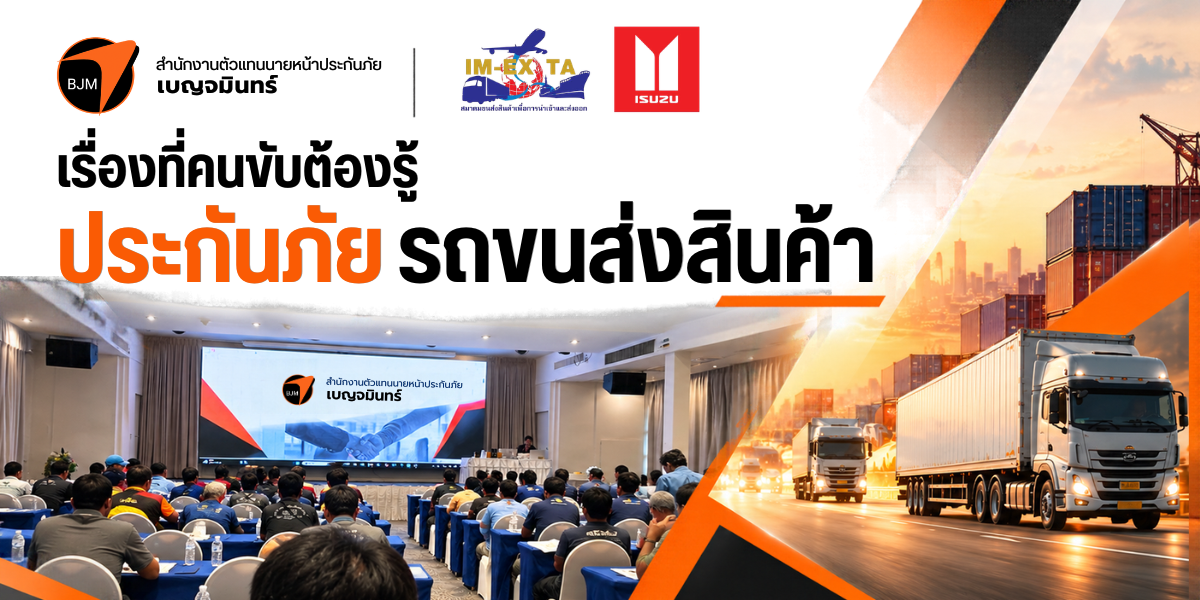
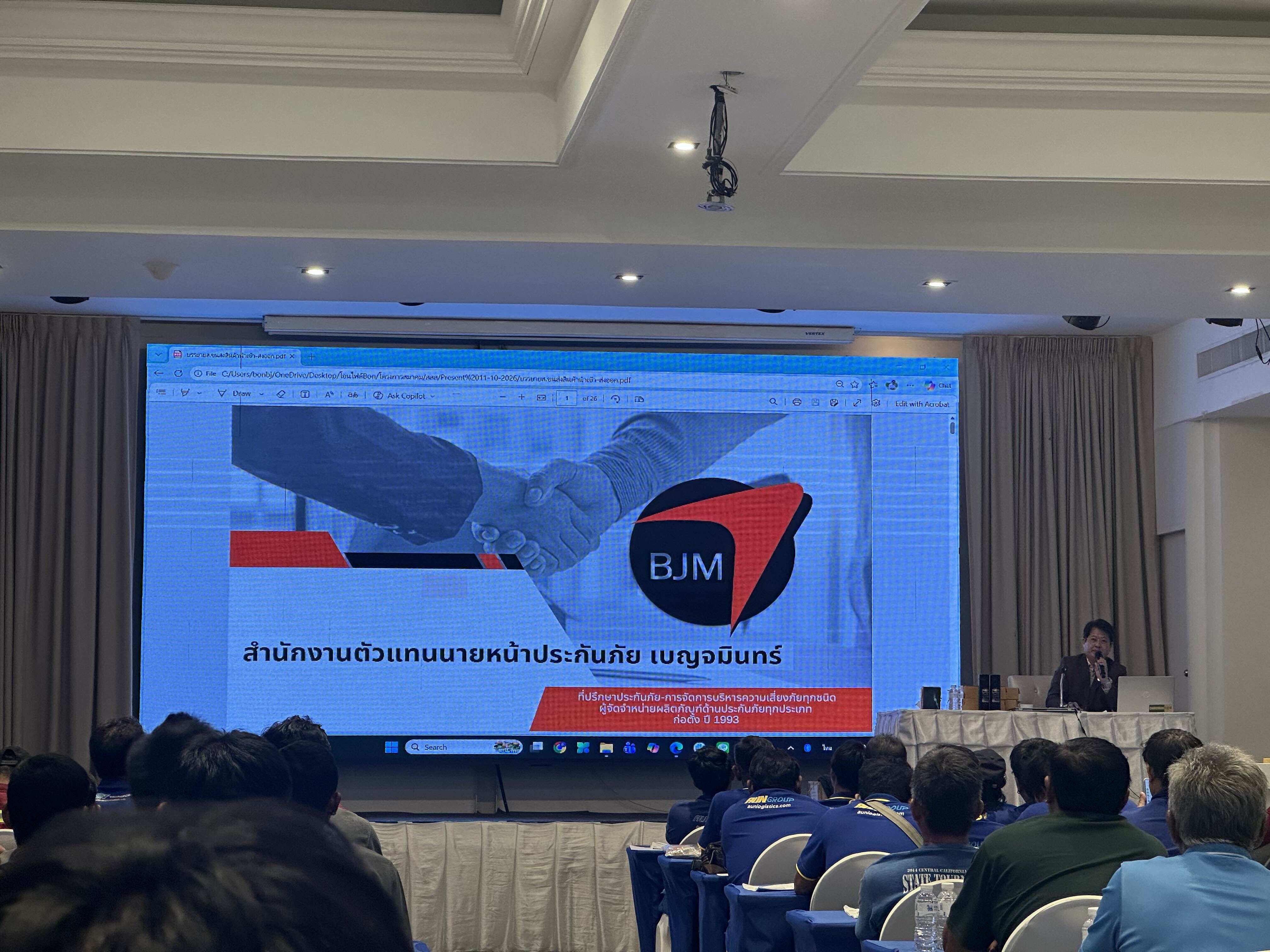
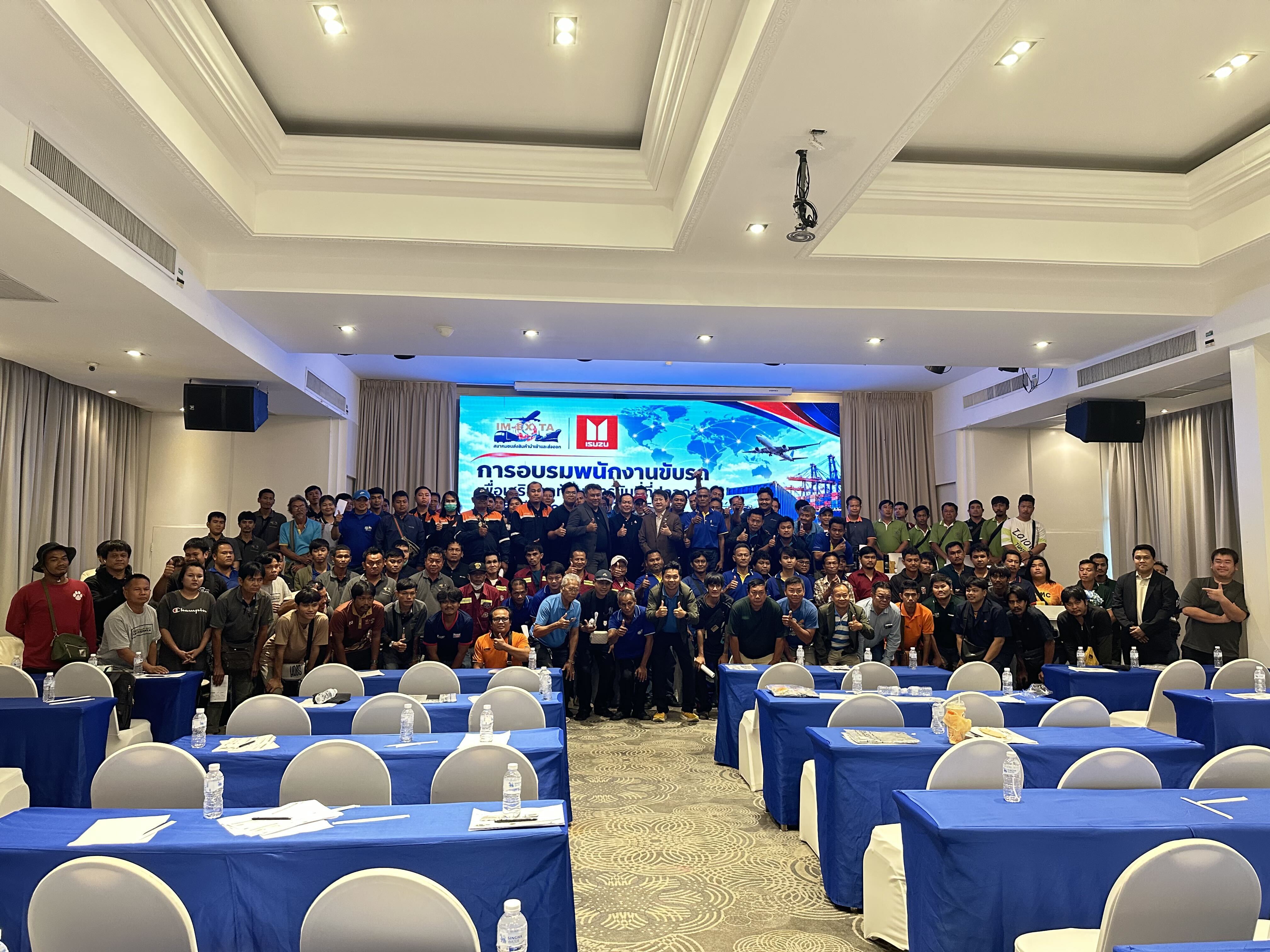
Bangkok, 11 October 2026 – You have transport insurance and truck insurance, so why was your claim rejected? Patipone “Bon” Vachiratanusorn, Executive Director and Founder of Benjamin Insurance Broker (BJM), answered that question in his talk “Insurance Essentials Every Freight Driver Should Know” at the “How to Drive Safely” seminar. The Import-Export Transport Association (IM-EX TA) organized the event with Isuzu at Avana Hotel Bangkok, and more than 100 truck, 10-wheeler and tractor-trailer drivers from logistics operators across Thailand attended.
Patipone has more than 30 years of experience in insurance and has advised the Isan Freight Transport Association since 2006. His session focused on the cases where cargo insurance and truck insurance do not pay, which many logistics operators only discover after an accident.
Types of Transport and Truck Insurance in Thailand
A freight business should carry at least three types of cover:
- Truck insurance: compulsory motor insurance (Por Ror Bor) plus voluntary cover (Class 1, 2, 3, 2+, 3+)
- Cargo / carrier liability insurance: covers customers’ goods that are damaged or lost in transit
- Warehouse insurance: fire and property all risks for warehouses and cargo yards
Common Carrier Liability Insurance Exclusions
Carrier liability policies contain many exclusions. These are the ones that most often lead to rejected claims:
- Damage caused by the nature of the goods, such as soda cans bursting in the heat
- Packing or lashing below standard, or an unlocked container
- Deteriorated vehicles or equipment, such as torn tarpaulins that let rain soak the cargo
- Incidents at the carrier’s own warehouse or yard, which fall outside in-transit cover
- Consequential losses, such as late-delivery penalties or loss of profit, unless agreed in advance
- Goods that require a special agreement first, including cargo in ISO tank, open-top or low-base trailers, glass, vehicles, fruit, livestock and bulk cargo
- Driver misconduct, such as theft of cargo or route deviation
Key Exclusions in Voluntary Truck Insurance
- Drunk driving or driving under the influence of drugs
- Racing or using the vehicle to commit a crime
- No driving licence, or the wrong licence class
- Using the vehicle for purposes not covered by the policy, such as towing or carrying hazardous goods
- Overloading
- A tyre burst with no other damage involved
Patipone also explained the Medical Council of Thailand’s 2024 announcement, which allows blood alcohol levels to be calculated retrospectively. Fleeing an accident and reporting to police the next morning no longer helps a driver avoid liability, or helps the claim get paid.
The Driver Faces Criminal Charges, the Owner Can Face Civil Liability
When a truck accident causes injury or death, the driver personally bears criminal liability. The employer or vehicle owner may also be liable for civil damages, including medical costs, funeral expenses, loss of income and loss of financial support. If the insurer denies cover, the full burden falls on the business owner, and it can be heavy enough to bankrupt the company.
Real Truck Insurance Claim Cases
Parked for the night, woke up to a lawsuit: A truck was parked overnight in an expressway lane while waiting to load cargo. It had no lights on and no warning triangle, as ministerial regulations require. A car rear-ended it and the driver was killed, and police concluded the truck side was solely at fault.
Dashcams that turned the case around: BJM’s claims team has used dashcam footage to help clients in several cases. In some of them, a charge of sole negligence was revised to shared negligence because the footage showed the tractor-trailer had its hazard lights on and the other driver had enough distance to avoid the collision.
Fleet Technology That Reduces Accidents and Simplifies Claims
- GPS-ADAS: collision warnings and driving behaviour records
- 360° CCTV: key evidence for truck insurance claims, reducing disputes and shortening claim times
- DMS (Driver Monitoring System): detects drowsiness, phone use and other risky driver behaviour
The “Safe Transport, Zero Accidents” Programme
BJM launched a partnership between insurers and transport companies, with BJM serving as the bridge between them. The programme includes:
- Legal and best-practice training for drivers
- Co-designing accident prevention measures that fit real operations
- Monitoring performance and compiling accident statistics
- Advising on how to resolve issues after an incident
FAQ: Transport and Truck Insurance in Thailand
What is the difference between truck insurance and cargo insurance?
Truck insurance covers the vehicle and third-party liability in an accident. Cargo or carrier liability insurance covers your liability for customers’ goods damaged or lost in transit. A freight operator should have both.
Why was my transport insurance claim rejected?
The most common reason is that the incident falls under a policy exclusion, such as substandard packing, an incident at your own warehouse, or goods that needed a special agreement. Review the policy conditions with your broker when you buy the cover.
Does truck insurance pay if the truck was overloaded?
Most voluntary motor policies list overloading as an exclusion, so cover may be denied. The details depend on each policy’s conditions.
Why buy truck insurance through a broker?
A broker compares conditions across multiple insurers and supports you when a claim happens, which is when logistics operators need help the most.
Talk to BJM about transport and truck insurance
“When insurance problems burn like wildfire, let Benjamin be the water that puts them out.”
Benjamin Insurance Broker has provided cargo insurance, truck insurance, warehouse insurance and risk management for logistics businesses in Thailand since 1993. Our claims service is simple, fast and fair, with quick results. We are a true friend when you need one most.
📞 Tel: 02-893-5561-2 | 081-720-3882
Ready for Benjamin to take care of you?
Let us be your personal risk management team.